
The column by Paul Schmidt-Troschke marks an exclusive World Cup partnership with The Guadalajara Post and the Monterrey Daily Post in which Schmidt-Troschke and the ‘World Cup etc’ international reporting team will be contributing exclusive World Cup coverage for both websites. ‘World Cup etc’ can be found across all good podcast providers.
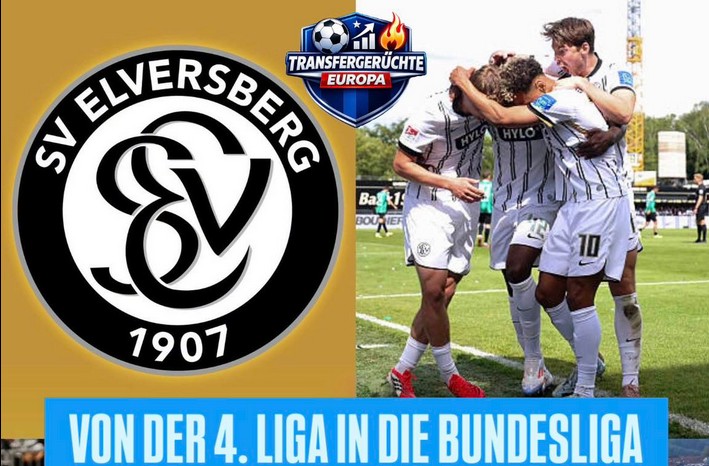
What happened on the last gameday of the 2025/2026 season in the 2nd? Bundesliga, Germany’s 2nd. The division just 2 weeks ago can only be described as a football dream come true, even though not for many. Somewhere in the Saarland, the smallest of the 16 German states, a tiny football club called “SV Elversberg” (SVE) located in the village of Elversberg with just 13.000 inhabitants accomplished the unthinkable: Promotion to one of Europe’s top leagues, the German Bundesliga. This story is already one for the history books, for many different but equally remarkable reasons. And if there is one throughline in all of this, it is an unshakeable trust in bold decisions born out of scarcity.
It all began back in 1989, Elversberg was in deep financial trouble and caught in a debt trap when the manager of a local pharma corporation and ex 2. Bundesliga player Frank Holzer rescued the club by paying the full debt amount of 800.000 Deutsche Mark, almost a million Euros in today’s money. He became president of the SVE and made the clubs revival and success to his labour of love. The firm he had ownership in, locally headquartered Ursapharm became the main sponsor and Frank Holzer’s investment strategy till today is following a “bricks not legs” approach, meaning that money was used to improve and expand physical and personnel sports infrastructure, not to pay for expensive transfers and salaries. And this strategy paid off more than anybody could imagine. After the appointment of Holzer the club immediately improved its performance and managed to enter the “Upper Division South-West” what used to be the German 3rd division in 1996. In 2011 Dominik Holzer, son of Frank Holzer became the new president and build up the club, temporarily culminating in the 2020 promotion to the 3. Bundesliga and just one year later promotion to the second division was achieved. Holzer also identified a big benefit of the club, namely its small size with just over 3000 members, which makes decision-making very efficient compared to bigger clubs with tens or even hundreds of thousands of members.
Even though the SVE has a wealthy patron heavily supporting the financial backbone of the club, this is not at all an example of success driven by money, as it is the case with so many clubs and even whole leagues all around the world, like Paris Saint Germain, Manchester City, or even German clubs like RB (Red Bull) Leipzig or the TSG Hoffenheim which was propped up and is still backed by the global software giant SAP.
This gets obvious when comparing the transfer balances of Elversberg and RB Leipzig over the same time. In the three seasons before Leipzig got promoted to the Bundesliga, it incurred a loss of over €50m, while the SVE netted almost €7m. And in total, Ursapharm invested around €30-€50m into the club, less than the amount RB Leipzig lost over just 2 transfer periods in the 2. Bundesliga. But what was it if not money what made this incredible story of success possible? The main answer is scouting.
The most important transfer in the club’s history was made in 2017, but not in the form of a player, but in the scouting department, when Nils Ole Book, a former professional football player himself, was appointed as a scout and quickly became sporting director. The DNA of his philosophy was as bold as simple: provide young, unknown talents with a low-pressure environment and lots of opportunities to prove their talent, and success is pre-programmed.
And this is exactly what happened. The most famous of players who earned his stripes at Elversberg is no other than Newcastle’s forward and €100m transfer Nick Woltemade. But many other players were uplifted by Books philosophy which of course also paid off financially to every stakeholder.
And then in 2025, the stage was set. SV Elversberg dominated the second division Bundesliga from the get-go, and even the stress due to huge personnel changes in both team and administrative body during the winter break could not shake the determination of every single Elversberger to put the previously unknown name on the national and even global stage. And with a statement of a 3-0 victory over Preußen Münster in its home stadium, the “Ursapharm Arena an der Kaiserlinde”, SV Elversberg managed to become the smallest club ever to play in the Bundesliga and now has the honour to have the Saarland represented in the league for the first time in over 30 years. And I am absolutely sure that this was not the last time Elversberg made headlines previously unimaginable.
By Paul Schmidt–Troschke for Mexico Daily Post
Paul Schmidt-Troschke is a German independent journalist, currently based in northern Mexico, specializing in international sports and their relationship to politics and society. He is the co-host of the “World Cup etc” and “World Sports etc” podcasts, available across all podcast platforms.