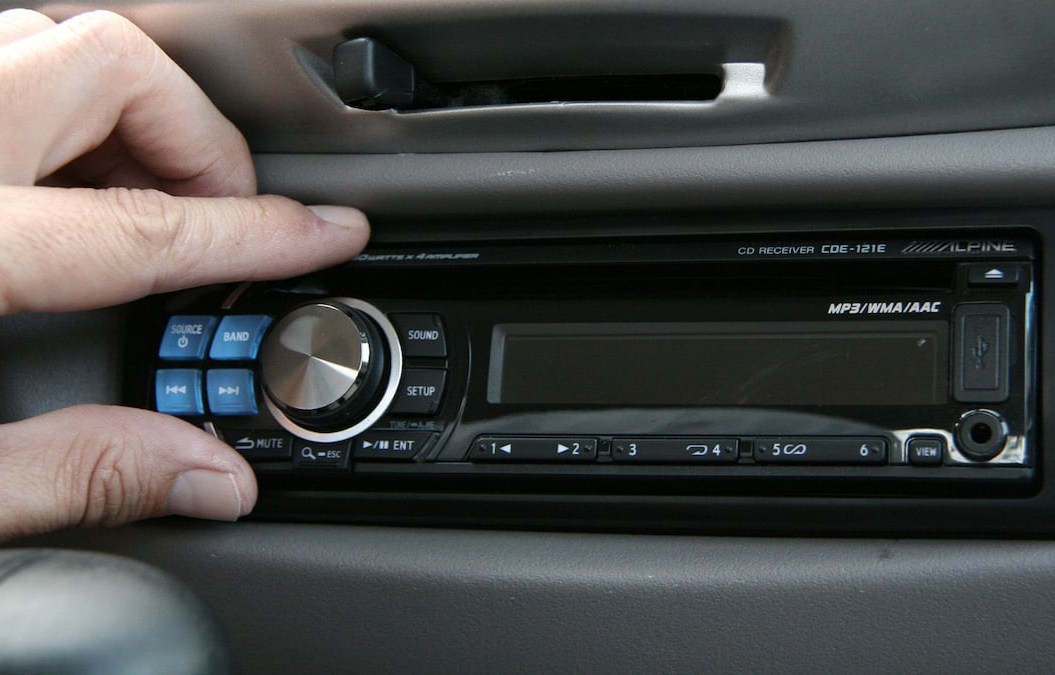

Turning the car stereo volume up to the maximum while driving can be very costly in more than one state in Mexico.
Drivers in Jalisco and Querétaro face a specific financial penalty for producing excessive noise with their vehicle’s audio system. The regulation supporting this penalty already has a defined legal basis, article number, and consequences that traffic officers can enforce immediately during a traffic stop, without the need for measuring equipment.
The prohibition is explicitly included in the mobility laws of both states, and its scope covers any audio equipment that generates excessive noise inside or from a vehicle, regardless of whether it occurs on major avenues, residential areas, or high-speed roads. It is not a discretionary practice or merely a warning, but a formally classified traffic violation with a defined fine range.
How Much Is the Fine for Loud Music in Jalisco and Querétaro?
Article 361, Section II of the Mobility, Road Safety, and Transportation Law of Jalisco establishes a penalty of between five and ten times the value of the Unit of Measurement and Update (UMA) for anyone who produces excessive noise with a horn, exhaust system, or audio equipment, without distinguishing between highways and local streets.
With the 2026 UMA set at 117.31 pesos, the fine ranges from 586.55 to 1,173.10 pesos. The law groups this behavior together with other noise sources such as improper horn use and modified exhaust systems, indicating that legislators address the problem comprehensively.
In Querétaro, Article 73, Section VI of the State Mobility and Traffic Regulations explicitly prohibits the use of loudspeakers or the production of excessive noise through music playback devices. This behavior is classified among actions that put road users’ safety at risk.
The penalty range is identical to that in Jalisco: from 586.55 to 1,173.10 pesos under the 2026 UMA value. A notable aspect of the regulation is that it does not require technical measurement at the time of the violation, giving traffic officers broad authority to enforce it.
Both laws classify excessive noise generated by audio equipment as an offense that goes beyond public nuisance, considering it an active road safety risk that interferes with a driver’s ability to perceive auditory signals from the surrounding environment.
Noise pollution generated from a vehicle may prevent a driver from hearing emergency sirens, horns, or traffic instructions, elevating the offense to a category of collective risk rather than merely an inconvenience to other individuals.
Both States Classify Excessive Audio as an Active Road Safety Risk, Not Merely a Public Nuisance
What Does the Law Say About Noise Pollution in Jalisco and Querétaro?
The legal framework in both states places violations involving excessive vehicle audio within traffic coexistence and road safety regulations rather than solely within environmental pollution regulations. This broadens the range of situations in which an officer may issue a citation.
In Jalisco, Section II of Article 361 allows authorities to impose a fine as soon as the noise exceeds acceptable levels, without requiring the driver to accumulate prior violations or receive a warning beforehand.
The maximum penalty of 10 UMA may be applied when the officer determines that the conduct represents a greater risk to road safety.
In Querétaro, the regulation is equally direct. It is sufficient for the sound to originate from the vehicle and be perceived as excessive from outside the vehicle for the penalty to apply. Authorities are not required to demonstrate a specific decibel level or possess sound-measuring instruments during enforcement operations.
Drivers who receive this citation in either state may challenge it through local administrative procedures. However, deadlines and processes vary by state, so it is advisable to consult directly with the mobility authority of the respective state before initiating any appeal process.

Source: adn40