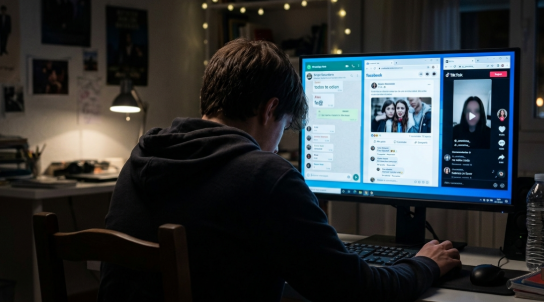

In 2025, 20.4% of the 94.9 million internet users aged 12 and older in Mexico experienced some form of cyberbullying. The most common type of cyberbullying experienced by both men and women was being contacted through fake identities.
These findings come from the 2025 Cyberbullying Module (MOCIBA) released by the National Institute of Statistics and Geography (INEGI). The survey provides information on the prevalence of cyberbullying during the 12 months prior to data collection and describes the situations reported by victims.
The highest prevalence of cyberbullying was recorded in Durango (24.5%), followed by Jalisco (24.4%), and Mexico City and Oaxaca, both at 23.8%. The states with the lowest prevalence were Sonora (14.7%), Sinaloa (15.5%), and Coahuila (15.6%).
Nationally, 37.2% of people aged 12 and older who experienced cyberbullying during the previous 12 months reported being contacted through fake identities. Additionally, 32.7% received offensive messages, while 24.1% received offensive phone calls.
The 20.4% prevalence represents approximately 19.4 million people. Among female internet users, 21.5% experienced cyberbullying, compared with 19.2% of male users.
Identity of the Cyberbully
During 2025:
- 61.1% of victims did not know the identity of the person who cyberbullied them.
- 24.2% identified the aggressor as someone they knew.
- 14.7% reported being cyberbullied by both known and unknown individuals.
Among victims who were able to identify the aggressor’s sex, men were the primary perpetrators. 57.2% of female victims and 61.1% of male victims stated that they had been targeted exclusively by male aggressors.
Digital Platforms Where Cyberbullying Occurred
Among people aged 12 and older who experienced cyberbullying nationwide:
- 41.5% were harassed through WhatsApp.
- 36.5% experienced harassment through cell phone calls.
- 29.7% reported harassment on Facebook.
Effects of Cyberbullying on Victims
In 2025, 57.0% of cyberbullying victims reported feeling anger as a result of their experience. Other common emotional effects included:
- 35.8% experienced distrust.
- 29.4% experienced stress.
Among women, 59.9% reported feeling anger, compared with 53.5% of men.
Time Spent Online
On average, people who experienced cyberbullying used the internet for 5.6 hours per day, which was slightly more than one hour longer than those who did not experience cyberbullying.
The survey also examines the identity and sex of the aggressor, the intensity of the harassment, and its impact on victims. Additionally, it includes information on victims’ age groups, educational levels, actions taken in response to cyberbullying, and the security measures internet users adopted to protect their personal information and devices.
Internet Users in Mexico
According to the 2025 National Survey on the Availability and Use of Information Technologies in Households (ENDUTIH), Mexico had an estimated 109.5 million people aged 12 and older.
Between May and October 2025:
- 94.9 million people (86.7%) used the internet on some type of device.
- 50.1 million were women.
- 44.8 million were men.
Internet users spent an average of 4.6 hours per day online.
Security Measures
Among people who used the internet on any device during the three months prior to the survey:
- 64.9% reported adopting at least one security measure to protect their computer, tablet, mobile phone, or online accounts.
- 88.9% used additional passwords or authentication methods (such as passwords, PINs, patterns, access codes, or two-factor authentication) as their primary security measure.
- 48.2% used biometric authentication, including fingerprint recognition, facial recognition, or iris scanning.
Source: mexico.quadratin