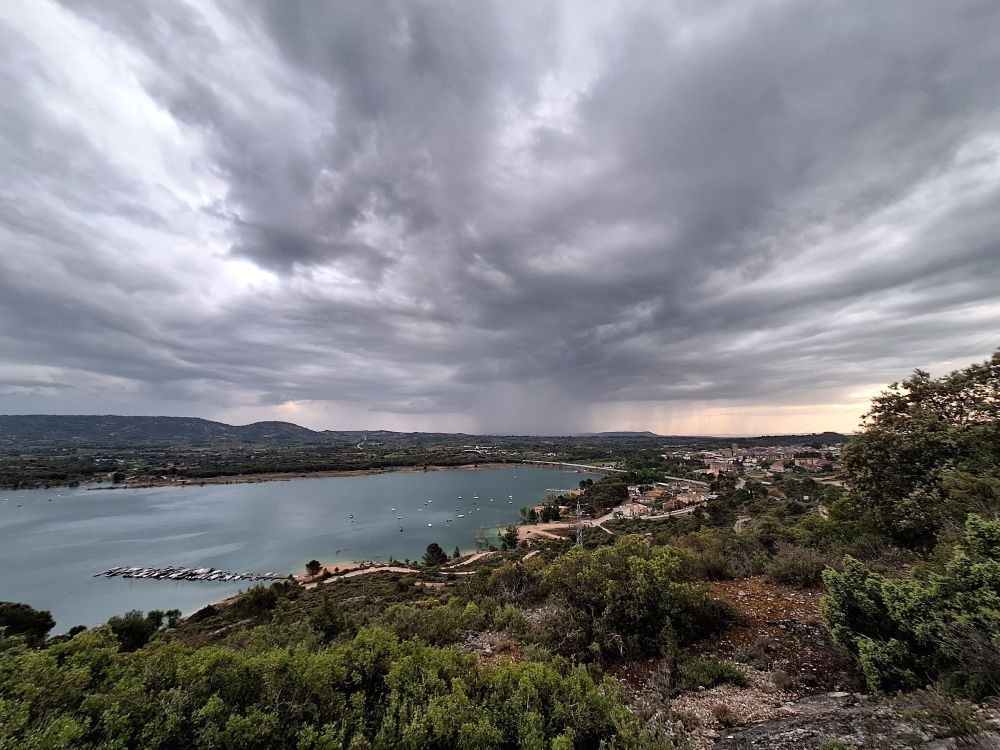

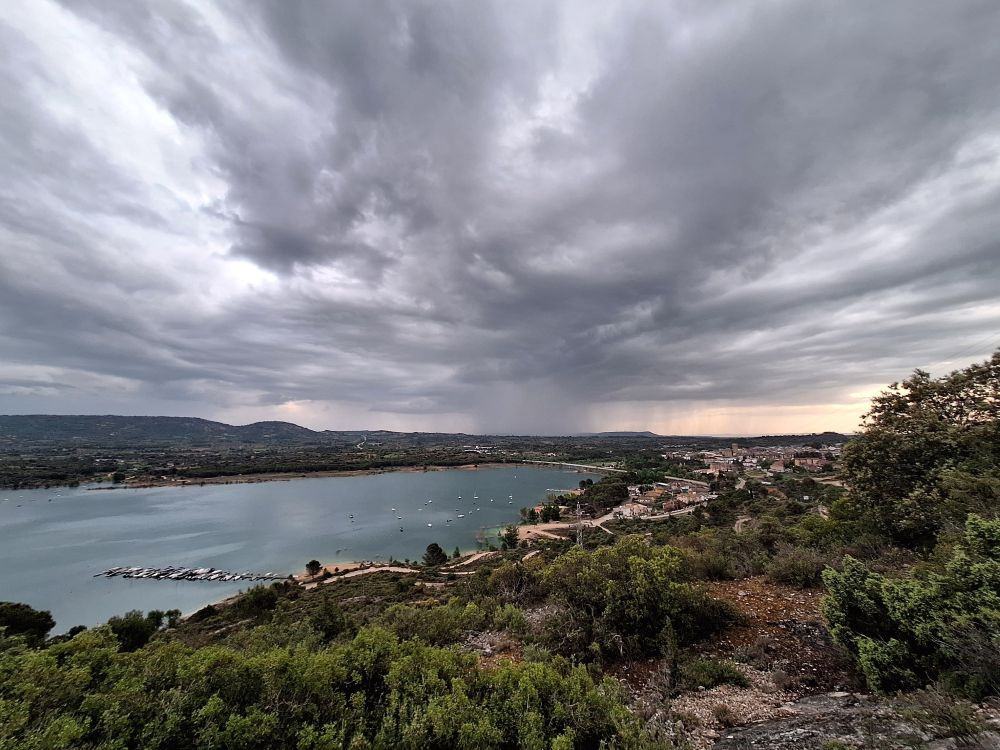
Water reserves in the province of Guadalajara have experienced a further decline this week of 17 hm³, compared to an increase of 34 hm³ during the same week last year. The average increase for the last ten years is 21 hm³ for this period, according to data updated last Monday, April 27, by the Embalses.net platform. Throughout this month, the amount of water stored in the province of Guadalajara has decreased by 42 hm³, equivalent to filling 16,800 Olympic-sized swimming pools or the Santiago Bernabéu football stadium 17 times. The 17 hm³ decrease this week alone would be comparable to filling 6,800 Olympic-sized swimming pools or seven football stadiums the size of the Bernabéu.
With this decrease, water reserves now stand at 1,997 hm³, representing 67.13% of their total capacity of 2,975 hm³.
During the same week in 2025, the province’s water reserves stood at 1,926 hm³ (64.74%), and the average for the last ten years during this same week is 1,095 hm³ (36.82%).
It should be noted that the gates of the Tagus-Segura Water Transfer were reopened on March 16th, after being closed for two months for repairs, with approximately 290 hm³ remaining to be transferred. According to data from the Tajo Hydrological Information System (SAIH Tajo), water is currently being released into the Segura River at a rate of 25.56 cubic meters per second, which equates to approximately 2.22 hm³ per day, almost the volume of a football stadium.
In this general context, based on data from last Monday, the reservoirs in the upper reaches of the Tagus River have decreased by 13 hm³ this week, double the decrease of last week (-6 hm³). The volume of water in the Buendía reservoir has fallen by 3 hm³, to 1,014 hm³, representing 59.47% of its 1,705 hm³ storage capacity. Meanwhile, the Entrepeñas reservoir has lost 10 hm³ and now holds 635 hm³, at 78.10% of its total capacity of 813 hm³.
In total, the headwater reservoirs hold 1,649 hm³, representing approximately 65.48% of their total capacity of 2,518 hm³.
With these levels and according to the operating rules of the water transfer, which do not yet include the ecological flows of the Tagus River, the reservoirs are at level 1, as their reserves exceed 1,300 hm³. Therefore, the competent authority can approve automatic transfers of 60 hm³ per month.
Alcorlo and El Vado see a decrease in their reserves.
Regarding the other reservoirs in the province, Alcorlo and El Vado are losing water, Bolarque is rising, and the rest remain stable.
Alcorlo lost two cubic hectometers this week and now holds 148 hm³ of its 180 hm³ capacity (82.22%).
Almoguera remains stable at 6 hm³, out of a maximum of 7 (87.71%).
Beleña remains at 40 hm³, the same as last week, compared to its 53 hm³ capacity (75.47%).
Bolarque has gained 1 hm³, reaching 27 hm³, out of a possible 31 hm³ (87.09%).
El Atance continues at 20 hm³, the same as last week, compared to its 35 hm³ capacity (57.14%).
El Vado has lost three cubic hectometers, falling to 41 hm³, out of a 56 hm³ capacity (73.21%).
La Tajera remains at 46 hm³, compared to its total capacity of 64 hm³ (71.87%).
Pálmaces remains at 20 hm³, compared to its possible 31 hm³ (64.51%).
Reservoirs in Castilla-La Mancha fall by 5 hm³
Across the region, reservoirs have decreased by 9 hm³ this week, compared to a loss of 5 hm³ last week. They now stand at 4,133 hm³ out of a total capacity of 5,800 hm³, representing 71.26% of capacity.
The situation by province is as follows:
Albacete rises by more than half a percentage point to 65.47%.
Toledo increases slightly to 66.74%.
Guadalajara falls slightly to 67.13%.
Cuenca rises slightly to 79.45%.
Ciudad Real rises by nearly half a percentage point to 89.28%.
Source: eldecanodeguadalajara