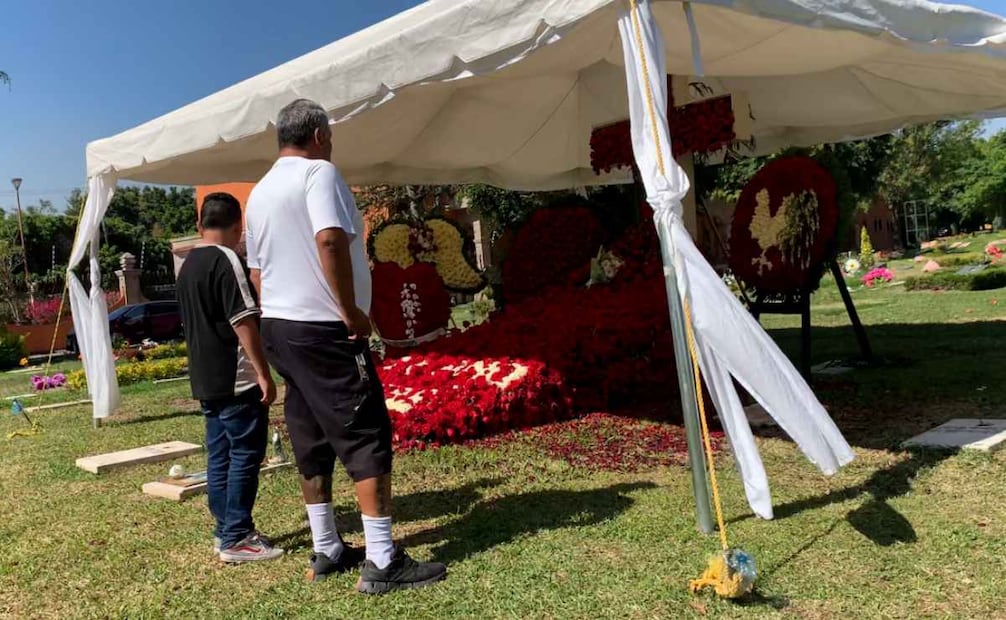
Under a white tent, next to the tomb of a brother of the “narco of narcos,” Rafael Caro Quintero, hundreds of roses continue to adorn the grave of Rubén Oseguera Cervantes, “El Mencho,” which has become a tourist attraction at the Jardín Recinto de La Paz cemetery in Zapopan, almost a month after the burial of the former leader of the Jalisco New Generation Cartel (CJNG), killed by the Mexican Army on February 22 of this year.
As if it were a tourist destination, several people arrive at this well-known private cemetery, located west of Guadalajara, walking toward the grave feigning inattention, as if they were wandering aimlessly and stumbled upon the tomb, which already draws attention due to the sheer number of flowers.
Among the decorations, the phrase “I love you, baby” stands out at the bottom. To the right, a wooden stand holds a wreath with a rooster’s body and legs made of white roses, standing out against a deep red background crafted from more flowers of the same botanical genus.
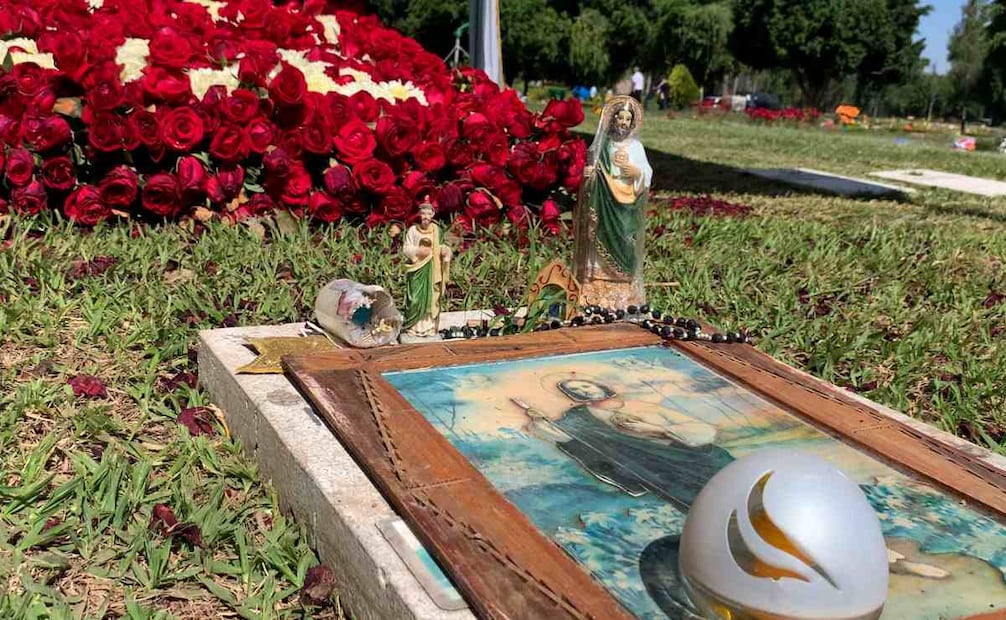
On the green lawn, hundreds of petals mingle, some fresh and others withered, creating a reddish hue on the grass. Nearby, on a tombstone next to that of the man who led one of the most bloodthirsty criminal groups in recent times, lie a painting of Saint Jude Thaddeus, two small plaster figures of the same saint, a black rosary, a votive candle, and a small box containing the Virgin of San Juan de los Lagos, all left by curious onlookers. These also form part of the decorations of the tomb, which is constantly watched over by the so-called “hawks,” whose presence is ever-present.
“Right now, it’s not like the lookouts are here all the time. Some come and go, and then others arrive shortly after. People ask me if they have permission (to record video or take photos) because they see me here a lot, but I tell them I have nothing to do with it.
In fact, I’ve spoken with Mr. (El Mencho’s) family; they’re very kind and understand that this is almost a historic event for many people, and they don’t mind people taking pictures,” a grieving woman explained matter-of-factly, on the condition of anonymity. She claims to have been at the cemetery almost every week since the beginning of the year, when she buried one of her loved ones there.
[The text abruptly shifts to a seemingly unrelated topic:] “Anyway, those kids back there already filmed you. They’re going to ask me what the hell you asked me, but it seems like they’re getting into the habit of coming here (to the grave). Don’t mess around, just get there already, you never know,” warned one of the workers who was watering the flower arrangements that morning.
And so, for about forty minutes, at least ten people arrived at Oseguera Cervantes’s grave, took pictures, and left hurriedly, always looking around, as if they had just done something illegal.
The only one who agreed to talk about what motivated him to come to the site was a father who, incredibly, only brought his 9-year-old son “to satisfy his curiosity,” since the boy is a fan of corridos (Mexican ballads).
“I was intrigued to come and see the tomb because he was, so to speak, my sort of idol because of the music, because of the songs they make about him,” the child said.
Source: eluniversal