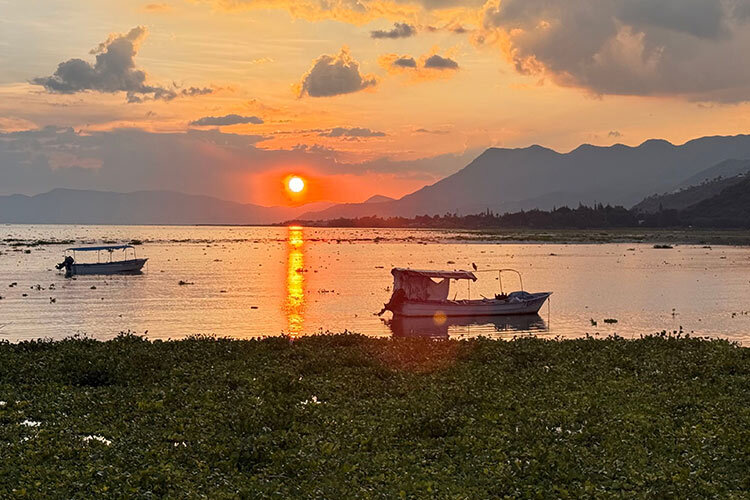
Lake Chapala, located in western Mexico, has been a source of food, drinking water, and a sense of belonging for the surrounding communities for generations. According to the National Water Commission (Conagua), the lake provides drinking water to more than four million people [1].
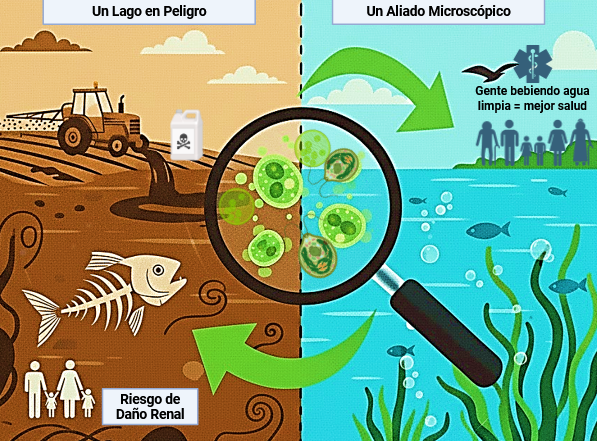
However, runoff from nearby agricultural fields has carried pesticides and heavy metals into the lake, disrupting the delicate balance of its ecosystem. Fish populations have declined, migratory birds have moved away, and toxic sediments cover the lakebed.
Studies show that this pollution has had a direct impact on the health of the population, with an increase in cases of childhood kidney damage and exposure to heavy metals such as mercury [2][3].
A study by Tec de Monterrey is investigating how the microalgae that inhabit the lake can absorb heavy metals and break down pesticide residues. These microorganisms can act as living filters, cleaning the water and returning oxygen to the ecosystem through photosynthesis.
The effectiveness of microalgae for pesticide bioremediation has been widely documented in the international scientific literature [4][5]. Nature itself may hold the key to healing the damage we have caused.
The team collects samples from eight different sites around Lake Chapala to identify which native microalgae species tolerate and degrade pesticides most effectively. In the laboratory, we expose these algae to increasing concentrations of contaminants and select the strains that continue to thrive.
The most resistant strains are carefully cultivated for reintroduction into the lake. Once released, they are expected to act as a natural treatment system: purifying the water, restoring oxygen levels, and promoting the return of aquatic life.
Pesticide contamination, such as glyphosate, has been reported in agricultural communities near the lake, where its presence has even been detected in children’s urine samples [6].
These findings reinforce the urgent need for sustainable biological solutions that clean the ecosystem without generating new pollutants.
If successful, this project could directly benefit local families. Cleaner water means healthier people, safer food, and renewed economic activity through fishing and tourism.
It could also serve as a model for other polluted bodies of water in Latin America, demonstrating that sustainable biotechnological solutions can be simple and effective.
For those of us working on the project, Lake Chapala represents more than a scientific challenge; it is a symbol of culture and community. Restoring it means giving life back to an entire region.
The Lake Chapala project exemplifies how biotechnology can work in harmony with nature, using living organisms instead of synthetic chemicals.
However, the participation and awareness of the community near Lake Chapala are also necessary for the appropriate, and, if possible, less toxic, use of pesticides in agricultural fields.
Source: tescience.tec