
“… I think of my father, of his sweaty hands before the bullfight…”
For some bullfighters, bullfighting is more than just a hobby. They are a way of being and of being in the world. We imagine tasks. We dream of casts. And when we have tickets for a bullfight, from days before we live it as if it were already happening, in a kind of dreamlike anticipation.
My dad’s hands were sweating on the day of the bullfight. He liked to arrive early at the square and see how it was filling up little by little, like someone who witnesses the birth of something unrepeatable. Agustín Lara said it best in the pasodoble dedicated to Silverio: “Con la garganta sequita, / muy sequita la garganta, / seca de tanto gritar…”
We were used to February meaning Plaza Mexico. But the authorities—determined to impose a uniform morality inspired by the new animalist orthodoxy—closed that possibility and not only limited our freedom to choose, but have interfered with an intimate tradition that is part of our identity. So now we have to look to other arenas, look for the excitement that we used to find at home in other squares.
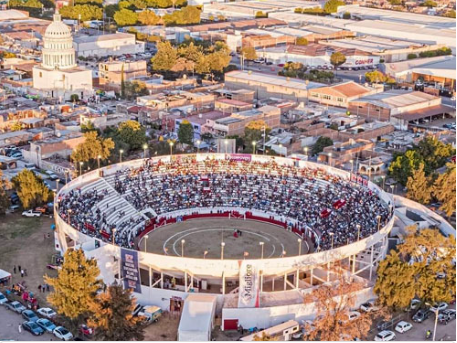
I don’t know the Plaza de la Luz, in León, Guanajuato. It’s almost ironic: for work reasons, for many years I frequently went to that city, one of the most prosperous in the Bajío, and I never crossed the threshold of its bullring.
Since the posters were announced, there were two dates that immediately attracted me: a bullfight and a bullfight. And for my good luck, they met on the same weekend.
The bullfight is well put together: a Spanish figure, Emilio de Justo; a young man who arouses interest, Arturo Gilio; and one of the most solid promises of national bullfighting, Bruno Aloi, with Santín bulls. The bullfight is not far behind: Jairo López, from Guadalajara, with a marked personality, will alternate with Mariam Cabas —the so-called “princess of bullfighting”— against steers from Xarama.
Now, while I pack my suitcase and check for the third time that the tickets are in the wallet – now digital – I feel that old nerve that has not changed over the years. The airport is no longer just a formality: it is the prelude to something that alters me and returns me to the essentials. Travelling to the bulls is not moving from one city to another, it is making yourself available. It is accepting that, for a few hours, the world will be reduced to the arena and what happens there. I think of my father, of his sweaty hands before the bullfight, and I understand that that emotion was not anxiety but a way of being alive. Going to the bullfights – taking a plane to see a bullfight – is to reaffirm that way of inhabiting the world: with expectation, with risk, with the intact hope that something extraordinary can happen.
Paradoxical as it may seem, I know in advance that I will most likely return with a slight disappointment. That the bulls are lackluster, that the wind gets in the way, that the right-handers are not up to the task, that the public confuses joy with demand…
Savater already explained it: bullfighting is, in a way, condemned to frustration. He pursues a perfect task that almost never arrives. His passion feeds on the same stuff as nostalgia, hope, and despair: a strange mix between what was, what could be, and what we still think possible. To go to the bulls is to accept in advance the possibility of failure and, despite this, to return.
Paloma hurries me to the airport. It’s the weekend of February 14 and she wanted to celebrate Valentine’s Day by giving me this trip.
We are not alone. We are accompanied by the February afternoons in La México, the memory of my father and that stubborn faith that the improbable will happen: that a brave bull charges with emotion and that a bullfighter has the courage and temper to nail it.
Source: Al Toro México