Fear travels fast. Faster than the planes full of tourists that land in the bay every week. In a matter of hours, hundreds of false or unverified posts flooded social media. Videos without context. Recycled images. Alarms amplified by the digital echo chamber. The perception of risk grew at the speed of the algorithm.
Last Sunday was a dark day. The violence—triggered after the killing of Nemesio Oseguera Cervantes, El Mencho—sparked headlines, rumors, and nervous conversations in travelers’ chats. But in Puerto Vallarta, the following mornings told a different story. Businesses raised their shutters.
The streets filled up again. And tourists—defying the digital noise—went out for walks.
“Many people have written to me asking if it’s a good idea to cancel their trip to Puerto Vallarta. My answer will be the same: DON’T!” wrote journalist Carolina Gómez Aguiñaga on the social network X. Her phrase became a local motto: “In Vallarta, there are more good people than bad.”
While doubts grew on social media, the United States government took a key step: it lifted the travel restrictions it had imposed on its personnel in various parts of Mexico.
The U.S. Embassy in Mexico and its consulates resumed normal operations. The message was technical, but forceful: U.S. citizens can resume standard precautions. However, Washington maintains specific advisories for some states—a standard policy—and recommended confirming flights with airlines, rescheduling in advance if necessary, monitoring local media, following instructions from authorities, staying in contact with family members, and calling 911 in emergencies.
On the ground, the effect was immediate. Airports were operating. Highways were open without official closures. And the tourism industry was trying to recover.
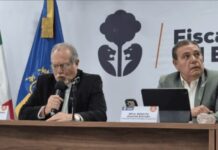
In Jalisco, Governor Pablo Lemus Navarro announced the end of the Red Code on Tuesday, February 24.
From his social media account, he confirmed: classes have resumed at all levels, economic activities are underway, public transportation is operating, fuel supplies are guaranteed, and municipal services have returned to normal. “In Jalisco, we are ready to return to in-person classes tomorrow, Wednesday…” he wrote.
The news reached the most everyday level. Amanda, a fourth-grade student, looked at her mother and asked, “Can we go out yet? Have the thieves left the streets?” The question sums up the real situation: that of daily life.
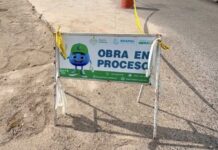
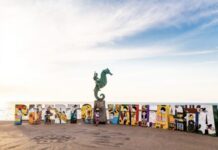
In Puerto Vallarta, state authorities reported the deployment of personnel to restore transportation, food, and tourist services. The airport—a key component of the destination—is operating normally. On Thursday, February 26, Lemus toured the Malecón in a video to send a direct message to the community: full support and a recovery plan.
The state government announced five working groups for the Costa Sierra Occidental region: economy, security, tourism, infrastructure, and public transportation.
“To the business owners… you are not alone. Together we will get through this,” he affirmed, a month before the start of Holy Week, one of the most important tourist peaks in the country.
The concern escalated to the international stage: would there be risks to the 2026 FIFA World Cup? The official answer was a resounding no. Mayor Claudia Sheinbaum Pardo assured that there were “all the guarantees” for the global tournament. Jalisco—host of group stage matches in Guadalajara—is maintaining its original schedule.
Lemus himself reported that, after speaking with Mikel Arriola, FIFA ruled out any changes to the venues. The political message was clear: Mexico is still on track.
But the most revealing scene didn’t take place in a government office. It happened at the airport. A resident of Puerto Vallarta confronted reporters from a U.S. network. His complaint was direct: they were spreading—he said—a distorted image of the destination. According to the complaint, the television crew was claiming that the city was extremely dangerous and that there were direct attacks against tourists.
The resident refuted this right there. Because if anything defined Sunday, it was misinformation.
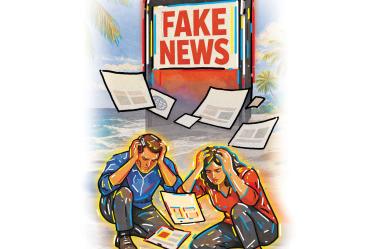
A report from the Monterrey Institute of Technology, titled “Disinformation Following the Killing of El Mencho: Volume, Speed, and Reach,” documented the phenomenon.
During the first hours after the operation, hundreds of false or unverified pieces of content circulated. Videos without descriptions, photographs of unclear origin, reused archival footage, and AI-generated content were disseminated on social media.
Source: excelsior